
Research to Practice (r2p) Core
Jessica Bunting
Research Team
Grace Barlet, Rosa Greenberg, Chris Le, Chris Rodman, Cora Roelofs
Abstract:
The Research to Practice (r2p) program has continued to build on 15 years of helping researchers adapt their work into practical, science-based solutions for reducing construction worker injuries and illnesses. Its work includes sharing those resources with at-risk workers and contractors positioned to take action and collaborating with a wide range of partners like internal and external research teams, NIOSH, OSHA, NABTU, and many others. Over the past year, the r2p team has held 15 webinars (with live Spanish interpretation available on all but one), maintained six websites including the popular www.silica-safe.org and www.stopconstructionfalls.com, and developed numerous resources, such as a new cut-off saw factsheet (English and Spanish), a PPE fit infographic (English and Spanish), and version 2 of Selecting Head Protection for Construction Work (English and Spanish).
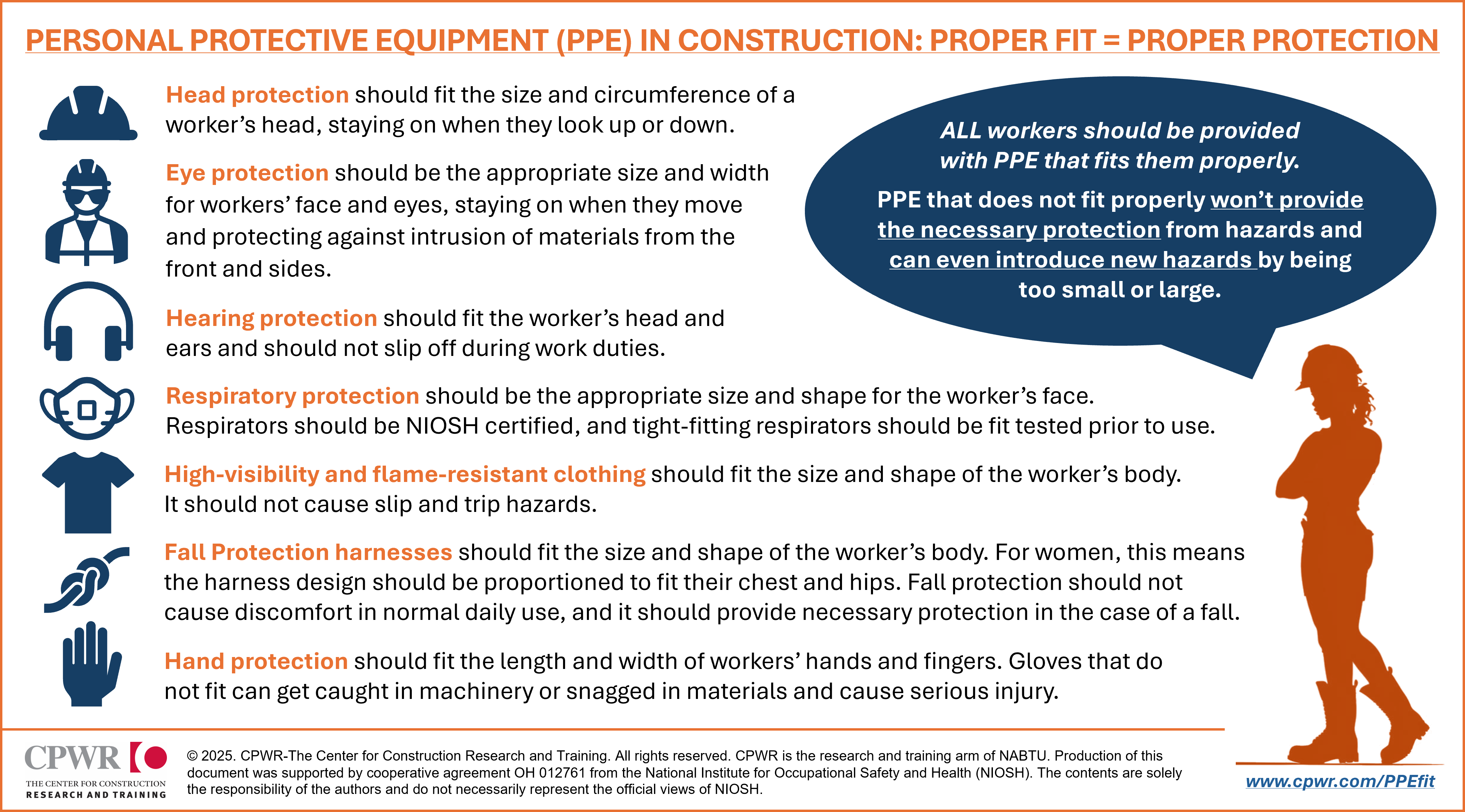
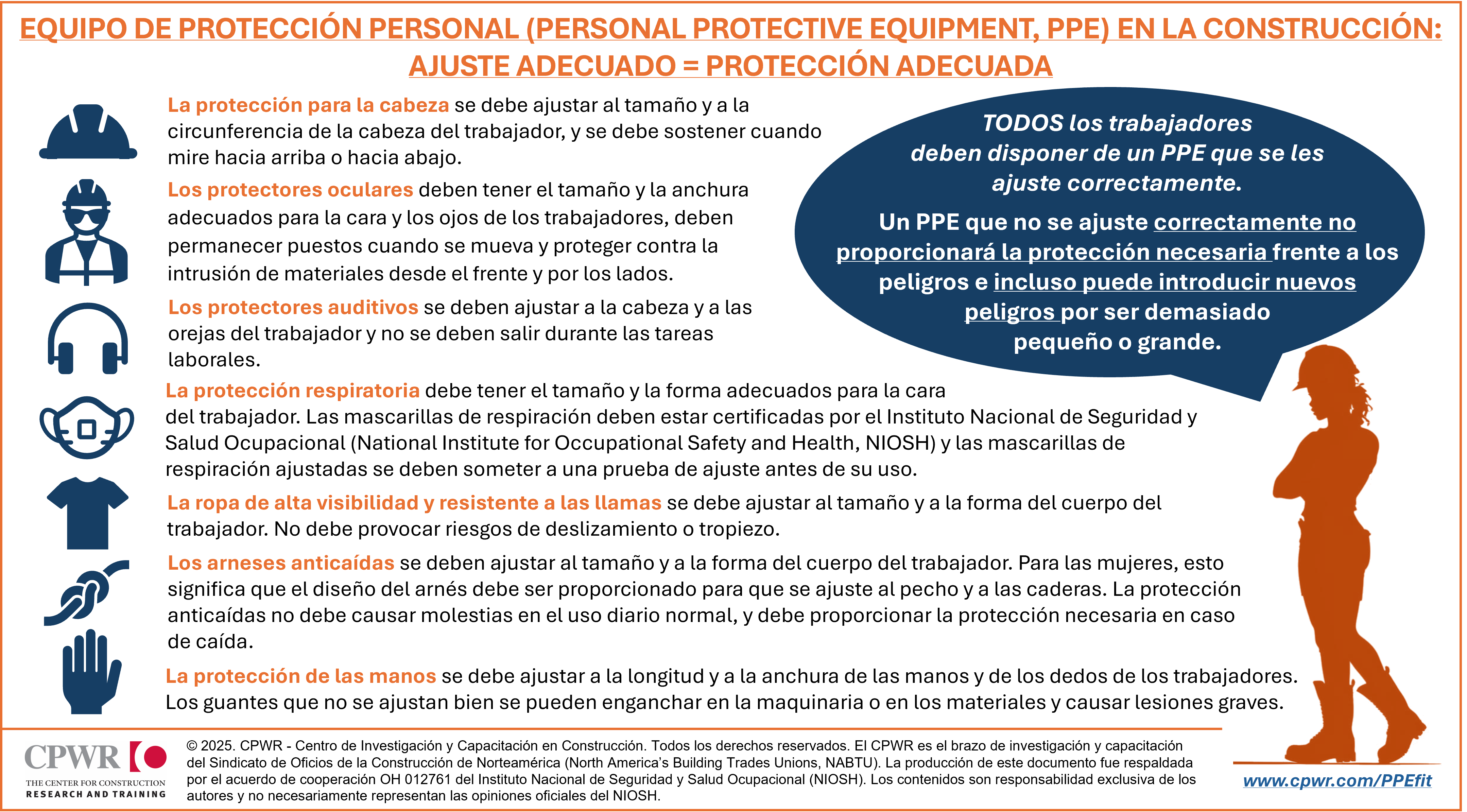
The team continued its leadership of the National Campaign to Prevent Falls in Construction and its associated Stand-Down, as well as the National Safety Stand-Down to Prevent Struck-by Incidents. In addition to developing promotional and educational resources for both efforts, the r2p team doubled the number of organizations in the Falls Campaign’s Premier Partner program to 48 and distributed over 203,000 fall-related Hazard Alert Cards in English and Spanish.
The team has started work on several new research projects to improve how r2p is conducted and increase uptake of solutions. To advance a project using a grassroots approach to promote heat safety to small employers in the Baltimore area, we have regularly convened a virtual roundtable on reaching these high-risk industry segments. In another project, a recently completed internal literature review on good practices for communicating with Spanish-speaking construction workers marked the first step in improving our translation processes so they better reflect the communication preferences, terminology and cultures of this unique subgroup.