
The finalists for the 2022 Liberty Mutual Safety Innovation Award in Construction were announced June 3 at CPWR’s annual Research to Practice Seminar and Workshop. The award — sponsored by Liberty Mutual Insurance and administered by CPWR — recognizes innovative evidence-based technologies, work practices, and programs (interventions) designed to reduce or eliminate construction hazards that lead to injuries and pain in the construction industry.
The winner received a $15,000 prize and a plaque and the two honorable mentions received a plaques.
GRAND PRIZE WINNER
Canvas Robotic Drywall Finishing Tool
DPR Construction

HONORABLE MENTIONS
SHK-1 Industrial Safety Helmet
Studson
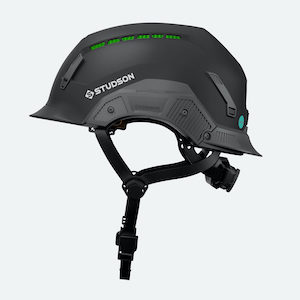 The hard hat is archaic technology. Its harness system design wasn’t intended to protect workers from impacts, just falling objects, and its design creates an even bigger risk: will it stay on during and after a fall? To respond, Studson brought shock absorbing technology from action sports into an industrial safety helmet – the SHK-1 Industrial Safety Helmet. Its interior is similar to a bike helmet, providing better impact energy absorption with Koroyd®. Koroyd® is a tubular or honeycomb structure that crumples in a more uniform manner, at angled impacts, and it performs better than expanded polystyrene or expanded polypropylene. The result is better brain protection in falls or strikes from objects. Studson also integrated into the design Brainshield® by Shield-X® — a silicone pad system which helps to reduce rotational forces during angled or oblique impacts. Finally, an embedded near field communication chip in the helmet, from the Swedish company twICEme®, allows the user to store an emergency medical profile with emergency contacts, allergies, or other pertinent medical information (such as diabetes) that could mean the difference between life and death. Several additional features make the helmet more comfortable, breathable, and adjustable, while retaining traditional aspects from the hard hat in the industrial design. Learn more about the SHK-1 Industrial Safety Helmet.
RECLEAN Pilot Study: Reducing Lead in Construction Workers Homes
Diana Ceballos, Boston University School Public of Health
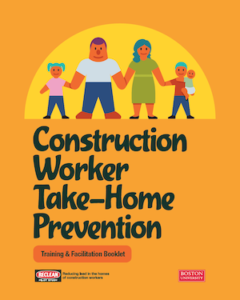 Construction workers can inadvertently bring home potentially toxic metals such as lead from the job site, creating what are commonly known as “take-home” exposures. Take-home exposures often overlap with existing structural vulnerabilities, such as lead-based paints, in the neighborhoods and homes of these workers. Given the low socioeconomic status of many construction workers, as well as their general lack of power to negotiate stronger occupational controls with employers, leaving the responsibility for minimizing take-home lead contamination with the workers is not sufficient to protect the health of families. This project aims to reduce lead exposures in the homes of construction workers through environmental and educational interventions that will empower workers and their families to prevent lead poisoning. Participants in the study are assigned to one of three groups carrying out different combinations of interventions, including having home inspections, using cleaning products designed for lead, completing an in-home education workshop, or training on the best ways to reduce exposure to lead on the job site. Preliminary findings suggest these trainings are increasing the learning of workers and their families and providing useful new information and resources to reduce exposures. Learn more about the RECLEAN pilot study.